Hebei Guanyu Environmental Protection Equipment Corp.,Ltd.

Hebei Guanyu Environmental Protection Equipment Corp.,Ltd.

Influencing Factors of UV Sterilizers

2016 09/27

Size and type of organism: Theoretically, UV radiation can kill viruses, bacteria, algae and protozoa. In general, larger organisms, such as protozoa, require a higher dose of UV radiation than organisms such as bacteria. But there are also differences between the various types of organisms of the same type: some bacteria are more resistant to other ultraviolet radiation.

Power of the lamp: The amount of UV light generated by the lamp is reflected in the wattage of the bulb. A lamp with a higher wattage produces more ultraviolet light. The ability of the germicidal fluorescent lamp to produce UV light decreases with age, and in most cases, the bulb needs to be replaced every 6 months. UV light is best produced at a temperature of 104-110ºF; cooler will result in less output.


UV penetration: If the UV light can not penetrate the water, it will not be effective. Higher water turbidity will decrease penetration. UV sterilizers should be placed after the biological and mechanical filters so the water is as clear as possible when it enters the sterilizer. Salinity also affects penetration; UV light penetrates freshwater better than saltwater. Finally, cleanliness of the lamp or sleeve is important. If a film or mineral deposit covers the lamp or sleeve, the light will be partially or totally blocked. The distance of the lamp from the water also influences the effectiveness. UV light will only penetrate clear saltwater to a depth of 5mm.
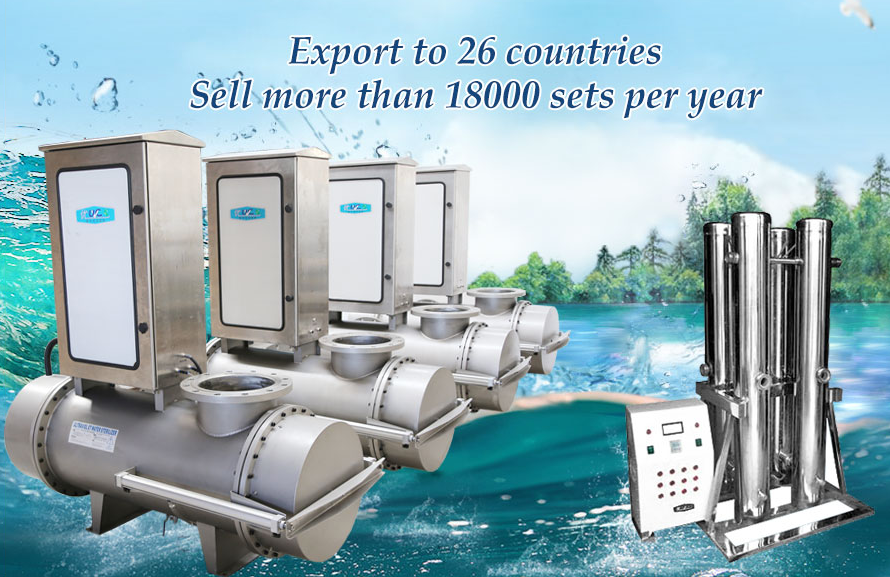

UV sterilizers


Contact time: The longer the amount of time the water is being exposed to the UV light, the more killing power is available. The contact time, sometimes referred to as "dwell time," is influenced by flow rate of the water: slower flow rates increase contact time. The length of the bulb also affects the contact time; with a longer bulb, the water is in contact with the UV light for a longer period of time. Another variable to consider is the turnover time (amount of time required to have the entire volume of water in the aquarium pass through the sterilizer). Since the "sterilized" water constantly mixes with the water in the aquarium as it returns, it is impossible to "sterilize" all the water in the aquarium. That would only be possible if all the water would be removed, sterilized, and then returned to the aquarium at one time. This may result in sterilized water, but would certainly raise havoc with the aquarium inhabitants! Calculating turnover time is mathematically difficult, but can be approximated with the following formula:

9.2 x gallons in tank = number of hours for one turnover
flow rate in gallons per hour

Temperature: UV light is best produced at temperatures of 104-110ºF; cooler temperatures will result in less output. Quartz sleeves help to insulate the bulb from the cooler aquarium water and thus maintain a higher UV output.